
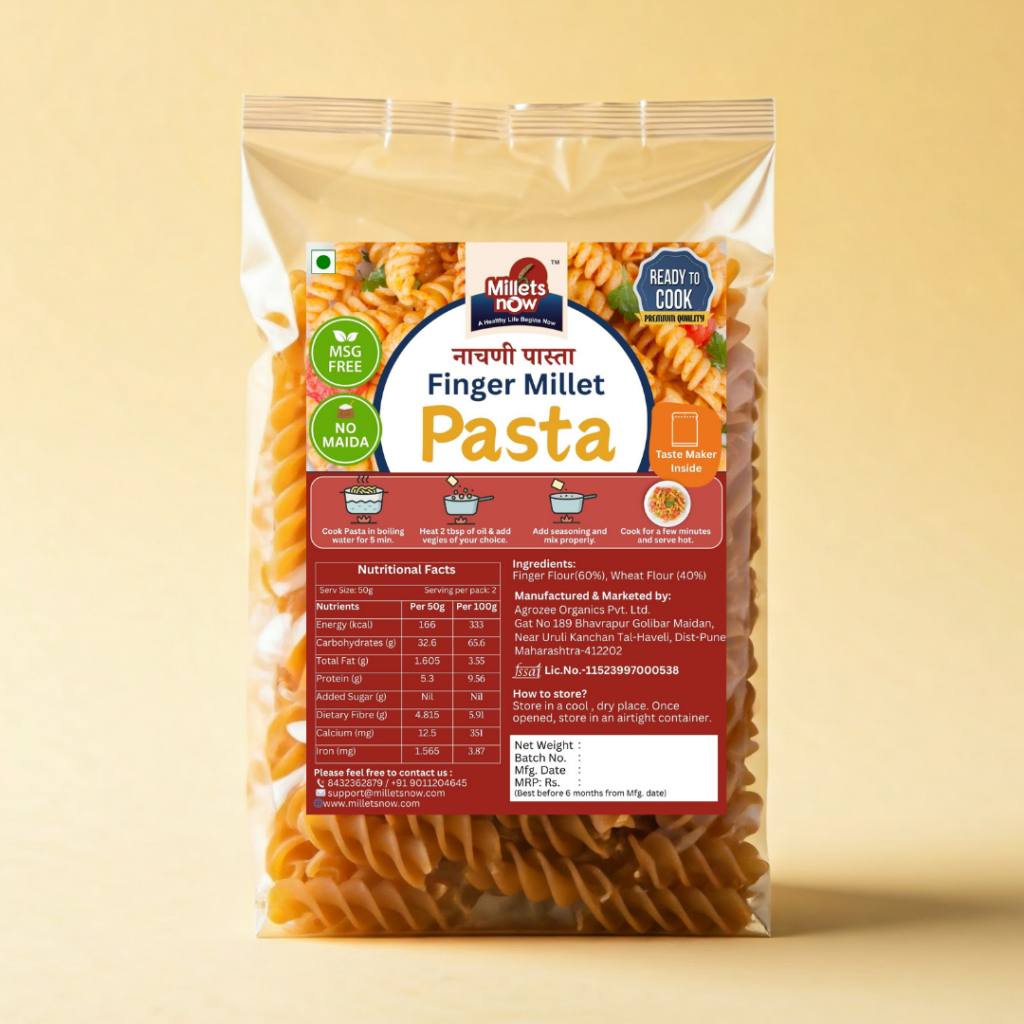
Nachani (Ragi) Pasta is made using ragi flour, either fully or partially, instead of refined wheat flour. Ragi has been consumed in India for generations and is known for its high nutritional value. When used in pasta, it becomes a wholesome food suitable for daily consumption. Unlike conventional pasta, which is high in carbohydrates and low in nutrients, nachani pasta provides balanced nutrition with slow-release energy.
With increasing awareness about healthy eating and traditional grains, millets are gaining popularity across India. Among them, Nachani, also known as Ragi or Finger Millet, stands out as one of the most nutritious grains. Nachani (Ragi) Pasta is a modern, healthier alternative to regular pasta, offering the goodness of ancient grains in a convenient and easy-to-cook form.
Nachani is naturally rich in essential nutrients that support overall health.
Dietary fiber for digestive health
Calcium for strong bones and teeth
Iron to support healthy blood levels
Plant-based protein for body strength
Complex carbohydrates for sustained energy
Ragi pasta is also known for being easy to digest compared to many refined grain products.
The high fiber content helps improve digestion and promotes gut health.
Ragi pasta keeps you fuller for longer, which can help control portion sizes and reduce overeating.
Nachani has a low glycemic index, making ragi pasta a better choice for maintaining stable blood sugar levels.
Ragi is one of the richest natural sources of calcium among grains, supporting bone strength.
Complex carbohydrates in ragi release energy slowly, making it suitable for active lifestyles.
| Aspect | Nachani (Ragi) Pasta | Regular Pasta |
|---|---|---|
| Primary Ingredient | Finger millet | Refined wheat flour |
| Fiber Content | High | Low |
| Glycemic Index | Low | High |
| Calcium | High | Low |
| Digestibility | Easy | Moderate |
| Nutritional Value | High | Low |
Made from traditional millets
Contains more nutrients than refined pasta
Suitable for a balanced Indian diet
Can be included in regular meals
Works well in both Indian and continental recipes
It is an excellent option for people looking to make healthier food choices without compromising on taste.
Nachani pasta is cooked in a similar way to regular pasta:
Boil water with a little salt
Add the pasta and cook until soft
Drain excess water
Add vegetables, spices, or sauces as preferred
Serve hot
Vegetable ragi pasta
Masala-style nachani pasta
Ragi pasta with light sauces
Pasta for lunch boxes
Quick evening meals
Nachani pasta is suitable for:
Adults and children
Elderly people
Individuals managing weight
People looking to reduce refined food intake
Those following a millet-based diet
Nachani (Ragi) Pasta is a healthy and nutritious alternative to regular pasta, combining traditional Indian grains with modern eating habits. It is a practical choice for those seeking better nutrition, improved digestion, and balanced energy in their daily meals. Including millet-based foods like ragi pasta in everyday diets can be a simple yet effective step toward healthier living.
Order Now: https://www.liflic.in/product/nachani-pasta-or-ragi-pasta/
Yes, it is made from ragi, which is a nutrient-rich millet and offers more health benefits than regular refined pasta.
Ragi pasta can be consumed regularly in moderation as part of a varied and balanced diet.
Yes, due to its low glycemic index, it is considered suitable for diabetic diets when portion sizes are controlled.
Ragi is naturally gluten-free, but some products may contain wheat. Always check the ingredient list.
It has a mild, earthy flavor that blends well with vegetables, spices, and sauces.
Yes, it provides essential nutrients like calcium and iron, which support growth and development.