
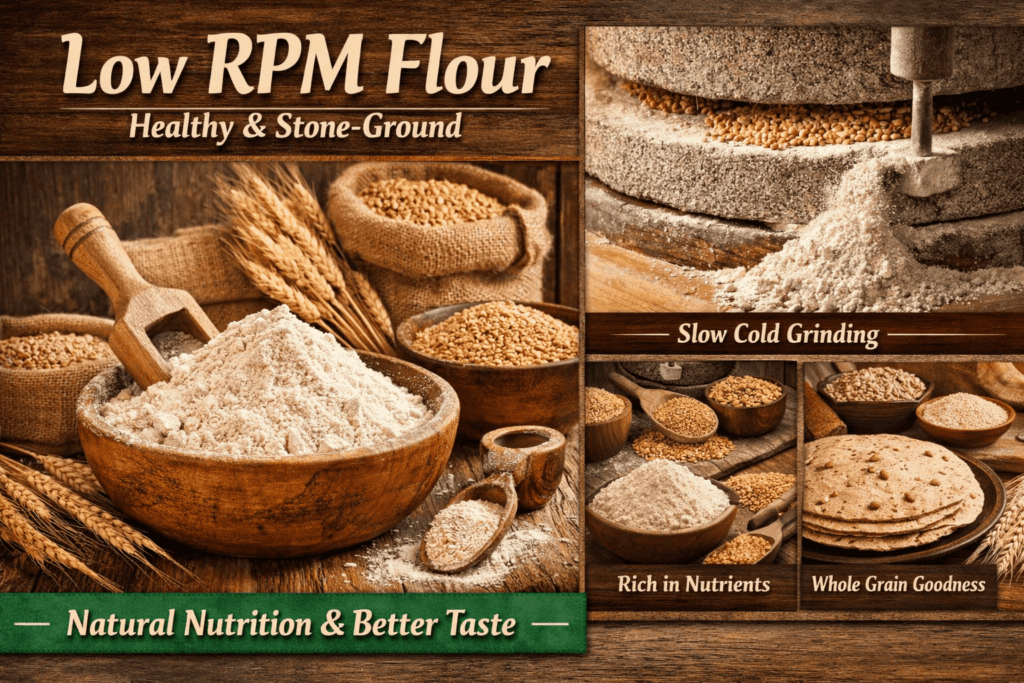
With growing awareness about healthy eating and natural food products, many consumers are moving away from highly processed foods. One of the biggest changes people are making is choosing low RPM flour, which is produced through traditional stone grinding methods. This type of flour is often called stone ground flour, chakki atta, or slow-milled flour.
Unlike modern industrial milling that uses high-speed machines, low RPM grinding processes grains slowly, helping preserve their natural nutrients and flavor. This method is widely used for producing whole wheat flour, organic flour, millet flour, and multi-grain flour that are considered healthier alternatives to refined flour.
Low RPM flour refers to flour produced by grinding grains at low revolutions per minute (RPM) using traditional grinding machines or stone mills. Because the grinding process happens slowly, it generates less heat and helps maintain the nutritional value of whole grains.
In traditional chakki atta milling, grains are crushed between two large stones that rotate slowly. This process ensures that the bran, germ, and endosperm remain intact, creating flour that is rich in nutrients and dietary fiber.
High-speed roller mills used in industrial flour production often remove parts of the grain, reducing nutritional value. In contrast, low RPM stone grinding keeps the entire grain structure intact, producing a more natural and nutritious flour.
Because of these advantages, low RPM flour is often preferred for producing healthy wheat flour, natural atta, and stone-ground organic flour.
The production of low RPM flour follows a simple yet effective traditional method that prioritizes nutrition and quality.
The process starts with selecting high-quality grains such as wheat, millets, rice, maize, and pulses. Many natural food brands use organic grains to produce premium flour.
The grains are carefully cleaned to remove dust, stones, and impurities. Proper cleaning ensures hygienic flour production.
The grains are then ground using low RPM stone mills or chakki machines. The slow grinding process reduces friction and prevents overheating.
Excess heat during grinding can destroy vitamins, minerals, and natural oils in grains. Stone grinding produces less heat, helping preserve the nutritional content of the grain.
After grinding, the flour is collected and packaged fresh to maintain its taste, aroma, and nutritional value.
Grinding speed has a major impact on flour quality. High-speed industrial machines often generate heat due to friction, which can damage nutrients present in grains.
Low RPM grinding offers several advantages:
Preserves natural oils in grains
Retains vitamins and minerals
Maintains fiber content
Enhances natural flavor and aroma
Produces more nutritious whole grain flour
Because of this, slow milling methods are often used to produce premium quality wheat flour and organic stone-ground flour.
Low RPM flour is widely considered healthier than refined flour because it retains the complete grain structure.
Slow grinding preserves essential nutrients such as iron, zinc, magnesium, and B-vitamins found in whole grains.
Whole grain flour contains bran, which provides fiber that supports digestion and gut health.
Stone-ground flour has a lower glycemic index, meaning it causes slower increases in blood sugar levels compared to refined flour.
Because natural oils remain intact during slow grinding, stone-milled flour has a richer taste and aroma.
Fiber and natural nutrients present in whole grain flour help improve digestion and maintain a healthy gut.
| Feature | Low RPM Flour | Regular Refined Flour |
|---|---|---|
| Grinding Method | Traditional stone milling | High-speed roller milling |
| Heat Generation | Very low | High due to friction |
| Nutrient Retention | High | Reduced |
| Fiber Content | High | Often removed |
| Taste | Natural and rich | Neutral |
Because of these differences, stone-ground atta and whole wheat flour are often recommended for healthier diets.
Low RPM grinding can be used to produce many types of healthy flours, including:
Whole wheat flour (atta)
Organic wheat flour
Millet flour
Multi-grain flour
Ragi flour
Jowar flour
Bajra flour
Corn flour
These flours are commonly used to make rotis, chapatis, bhakri, breads, and traditional Indian foods.
The demand for healthy flour and natural food products has increased significantly in recent years. Several factors are driving the popularity of low RPM flour:
When buying flour, it is important to check labels and product descriptions. Some common indicators include:
Stone-ground flour
Chakki atta
Slow-milled flour
Cold-ground flour
Whole grain flour
Low RPM flour often has a slightly coarse texture and stronger grain aroma compared to refined flour.
Because low RPM flour retains natural oils, proper storage is important to maintain freshness.
Best storage practices include:
Store in airtight containers
Keep in a cool and dry place
Avoid exposure to moisture
Use within a few weeks for maximum freshness
Low RPM flour represents a return to traditional grain processing methods that focus on nutrition, quality, and natural food preparation. By grinding grains slowly using stone milling or chakki grinding, this method preserves essential nutrients, natural oils, and fiber.
As people become more health-conscious, the demand for stone-ground flour, whole wheat flour, organic flour, and millet flour continues to grow. Choosing low RPM flour is a simple yet powerful step toward healthier eating and more natural food choices.
Switching to slow-milled flour not only improves nutrition but also brings back the authentic taste and quality of traditional foods.