Honey has always been an important part of traditional diets and natural medicine. Long before refined sugar became common, people relied on honey as a natural source of sweetness and energy. Among the different types available today, forest honey holds a special place because of its natural origin and rich nutritional value.
This variety of honey is produced by bees that collect nectar from wild flowers, herbs, and trees found deep in forests. Because the nectar comes from many different plant species, wild forest honey often has a complex flavour and darker colour compared to regular honey. The environment in which bees produce this honey also contributes to its purity and nutritional richness.
For centuries, people living near forest regions have collected and used forest wild honey not only as a food ingredient but also as a natural remedy for several common health issues.
The main difference between forest honey and regular honey lies in where the bees collect nectar. In agricultural areas, bees often gather nectar from a limited number of cultivated crops. In contrast, bees living in forests have access to a wide range of wild plants.
Because of this diversity, the honey in forest environments often contains traces of nectar from medicinal herbs, flowering plants, and forest trees. This variety can influence the colour, taste, and aroma of the honey.
Another important factor is the natural process of harvesting. Traditional honey collectors usually gather honey directly from the honey comb, often leaving part of the hive intact so that bees can continue their natural activity.
Many people consider forest honey to be closer to pure honey because it generally undergoes minimal processing. When honey is collected directly from the hive and filtered without excessive heating, most of its natural enzymes and nutrients remain intact.
Pure honey naturally contains:
Natural sugars such as fructose and glucose
Enzymes produced by bees
Small amounts of vitamins and minerals
Antioxidants from plant nectar
These natural components contribute to the taste and nutritional value of honey. As a result, forest honey is often regarded as one of the best honey options for those looking for a natural sweetener.
Forest honey provides energy and contains several natural compounds that support overall health. While it is primarily known for its natural sugars, it also includes trace amounts of important nutrients.
Some commonly found components include:
Antioxidants that help protect cells
Small amounts of minerals such as potassium and magnesium
Amino acids and enzymes
Natural antibacterial compounds
These elements contribute to the reputation of forest honey as one of the best honey in the world when it comes to natural food products.
One topic that often comes up in discussions about honey is honey and diabetes. Since honey contains natural sugars, people with diabetes should consume it carefully. Compared to refined sugar, honey generally has a slightly lower glycemic index, which means it may cause a slower rise in blood sugar levels. However, it still needs to be used in moderation. For individuals managing diabetes, it is advisable to consult a healthcare professional before including honey regularly in the diet.
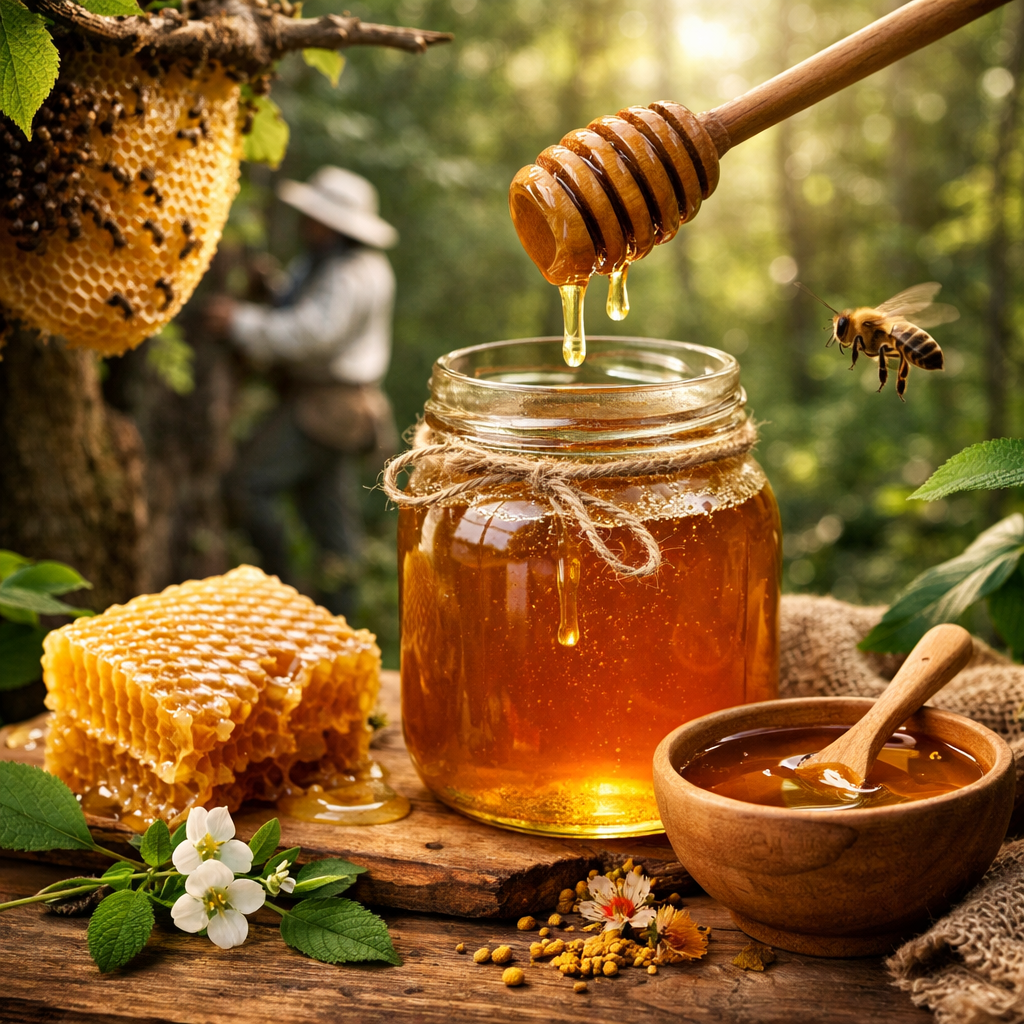
Harvesting honey from forests has traditionally been done by experienced honey collectors. They locate natural bee hives in trees or rocky areas and carefully remove honey without damaging the colony. The honey is stored inside the honey comb, which is made of wax produced by bees. Once collected, the honey is filtered to remove wax particles and other impurities before it is stored. This traditional approach has been practiced for generations and helps maintain a balance between honey collection and bee conservation.
Different regions of the world produce their own varieties of honey depending on the plants available. Forest honey stands out because it reflects the biodiversity of natural forests.
The flavour can vary from mildly sweet to slightly strong depending on the types of flowers and trees from which bees collect nectar. This uniqueness is one reason why many people consider it among the best honey in the world. Its natural production process and rich taste make forest honey popular among those who prefer traditional and minimally processed foods.
Forest honey can easily be included in everyday meals and drinks. Some common ways to use it include:
Mixing it with warm water and lemon in the morning
Adding it to herbal tea or milk
Using it as a spread on bread or toast
Drizzling it over fruits or breakfast cereals
Adding it to homemade desserts
Using honey instead of refined sugar is a simple step toward choosing more natural ingredients in daily cooking.
With the growing demand for natural foods, it has become important to choose honey carefully. Many products available in the market may be overly processed or mixed with sugar syrups.
When selecting honey, look for products that mention minimal processing and natural sourcing. High-quality forest honey usually has a thicker consistency and a distinct natural aroma.
Forest honey represents one of nature’s most remarkable natural foods. Produced by bees that gather nectar from diverse wild plants, it carries a unique flavour and nutritional profile that reflects the richness of forest ecosystems.
From traditional diets to modern kitchens, honey continues to be valued for its taste, versatility, and natural benefits. Whether used as a sweetener or enjoyed for its traditional health uses, forest honey remains a timeless and wholesome ingredient.
1. What is forest honey?
Ans: Forest honey is honey produced by bees that collect nectar from wild plants and flowers found in forest environments.
2. Why is forest honey considered pure?
Ans: Forest honey is often minimally processed and comes from diverse natural plant sources, which helps preserve its natural nutrients.
3. Is forest honey healthier than regular honey?
Ans: Many people believe forest honey has a richer nutritional profile due to the variety of wild plants from which bees collect nectar.
4. Can people with diabetes consume honey?
Ans: People with diabetes should consume honey in moderation and consult a healthcare professional before adding it regularly to their diet.
5. How is honey collected from the forest?
Ans: Honey collectors usually gather honey from natural hives by removing honey from the honey comb while preserving the bee colony.